
Orthopedic
- Created in Feline, Pet Health, Orthopedics
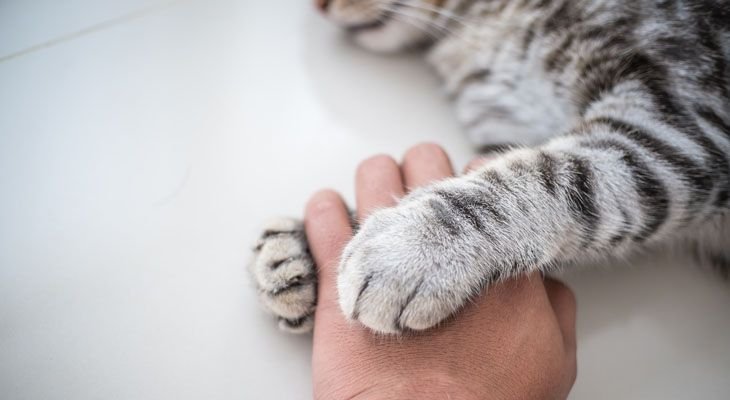
Cats are curious beings, and that curiosity can lead to injuries that affect their ability to move effortlessly through their environment. Of course, injuries are not the only source that can cause musculoskeletal limitations; sometimes, congenital defects may be the cause of a musculoskeletal problem.
Orthopedists seek to correct abnormalities or functional limitations associated with joints, tendons, ligaments, bones and the muscles of those structures, so, when a defect or an injury occurs and affects these structures, a veterinarian can implement the treatment needed to get your cat back to living a fuller life.
Injuries and Orthopedic Problems in Cats
Trauma is the main cause of joint and bone problems in cats, especially fractures associated with the pelvic and hind legs. They may result from:
- Falling from a significant height (e.g. a tree or a high story of a building)
- An attack by a dog
- Getting hit by a car
The tendons may also become sprained or strained; this is referred to as a soft-tissue injury. These injuries often arise when a joint is hyperextended or hyperflexed, causing the tendons to become torn or stretched. Injuries to the ligaments in the knee are common and can lead to severe inflammation and calcification of the menisci, which is the knee’s shock-absorbing cartilage. When the cartilage is impaired, degenerative changes in the knee’s ligaments and ruptures can occur, resulting in:
- Limping
- Wobbliness
- Swelling
Deterioration or damage of the joints, especially of the cartilage that forms a joint, can also lead to feline arthritis, which, in itself, can cause cartilage erosion and fluid buildup in the joint. Risk factors for arthritis vary, but include:
- Inherited cartilage malformations
- Torn or stretched tendons
- Bones not aligning properly during embryonic development
- Obesity
Treating Orthopedic Injuries
While surgery and weight loss can prevent further damage caused by arthritis, nothing can be done to prevent the damage that has already occurred. That said, medications can be prescribed to ease symptoms like pain and inflammation, and nutraceuticals may be able to restock joint cartilage proteins and help with joint remodeling. Physical therapy, acupuncture, ultrasound therapy and laser therapy are additional treatment options that are non-invasive.
Treatment of fractures—whether it is surgery or confining the limb with a cast or splint—depends on the type and location of the fracture, as well as whether a joint is involved. Another factor that might affect how a fracture is treated is whether a nerve was injured during the traumatic event.
When multiple tendons and/or the menisci are involved, surgery is required. Medications may also be administered to help with pain and inflammation, and therapy may be needed to restore function.
Congenital Defects and Orthopedic Problems in Cats
Sometimes cats are born with defects that cause musculoskeletal complications. Two that are common include:
Hip Dysplasia
This genetically inherited abnormality occurs when the ball (femoral head) and socket (acetabulum) are loose and not aligned properly, causing the ball to move awkwardly and the cat’s gait to be affected. When looking at a cat’s anatomy, the ball is the ridged top end of the thigh bone, and the socket is the cup-shaped cavity situated at the bottom end of the hip bone. With hip dysplasia, partial dislocation (subluxation) means that the ball and the socket knock and grind against each other. Over a period of time, the consistent wear and tear causes the socket to become thin and the ball to become flattened and worn. The end result is looseness of the whole joint and osteoarthritis.
While hip dysplasia is thought to be genetic in nature, another factor that plays a causative role in its development is obesity. However, because the condition is largely genetic, options for preventing and treating hip dysplasia are limited. Still, some recommendations are weight management, exercising to encourage strong hip muscles, anti-inflammatory drugs and dietary supplements containing glucosamine and chondroitin. There are also surgical options, including hip replacement.
Luxating Patella
The patella is a thick, triangular armor of bone (kneecap) that covers the front of the joints in a cat’s rear legs, and it is typically soundly attached to the tendons and ligaments within the knee joint. It glides easily up and down along the trochlea, which is located in the lower part of a cat’s femur and assists with bending and straightening of the knee.
Luxating patella is a condition in which the patella moves out of it usual position, either toward the inside or outside of the leg. While it can be the result of a congenital defect, it should be noted that it can also occur following blunt physical trauma. Clinical signs include:
- Lameness
- The inability to jump
- Not bearing weight on the affected leg
Treating a luxating patella usually requires surgery to permanently affix the patella in place and alter the tendons and ligaments so that they hold the patella in position.
If you suspect your cat may be suffering from an orthopedic issue, call our office to schedule an appointment. We will assess your cat’s musculoskeletal and general health and provide appropriate treatment options.