logo

Cold Spring

Animal Clinic, LLC

Menu
  • Home
  • New Patient Center
    • What to Expect
    • Payment Options
    • Veterinary Resources
    • Pet Wellness Program
    • Pet Selector
  • About Us
    • Meet Our Staff
    • Veterinarians
    • Technicians
    • Assistants
  • Services
  • Petsimonials
    • Memorials
      • Submit Your Pet Memorial
  • Contact Us
  • Veterinary Topics
    • Pet Health
      • Chronic Conditions
      • Digestive and Oral Health
      • Diseases and Viruses
      • Pests and Parasites
      • Orthopedics
    • Today's Veterinarian
    • Choosing Your Pet
      • Finding Your Pet
      • Cats
      • Dogs
      • Exotics
        • Amphibians
        • Birds
        • Reptiles
          • Lizards
          • Turtles
      • Small Mammals
        • Ferrets
        • Rabbits
        • Domesticated Animals
          • Prairie Dogs
        • Pocket Pets
          • Chinchillas
          • Guinea Pigs
          • Hamsters
          • Hedgehogs
          • Rats
      • Livestock
        • Cows
        • Donkeys, Horses & Mules
        • Goats
        • Pigs
        • Poultry
        • Sheep
    • Living With Your Pet
      • Bringing Your Pet Home
      • Children and Pets
      • Providing Care
      • Travel
      • Saying Goodbye
    • Newsletter Library
      • Cats
      • Tips for Pet Owners
      • Behavior & Training
      • Fleas & Parasites
      • Keeping Pets Healthy
      • Recognizing Illness
      • Nutrition & Food
      • Pet Dangers
      • Seasonal Topics
      • Visiting the Vet
      • Equine
      • Newsletter Archive
        • Fun with Pets
        • Unbelievable Pets
    • Video Newsroom
      • Health Topics
      • Technology and Science
      • Other Interests
    • Newsletter Library
    • Client Survey
    • Pets4Kids
  • Online Pharmacies What You Should Know
  • VetSource OnLine Pharmacy

(740) 366-5449

Exclusive Offer

First Visit is FREE

Sign up now

Error!

    • Home >
    • Articles >
    • Newsletter Library >
    • April Newsletter: Tips on Keeping Your Cat Calm through the Night

    April Newsletter: Tips on Keeping Your Cat Calm through the Night

    • Created in Newsletter Library

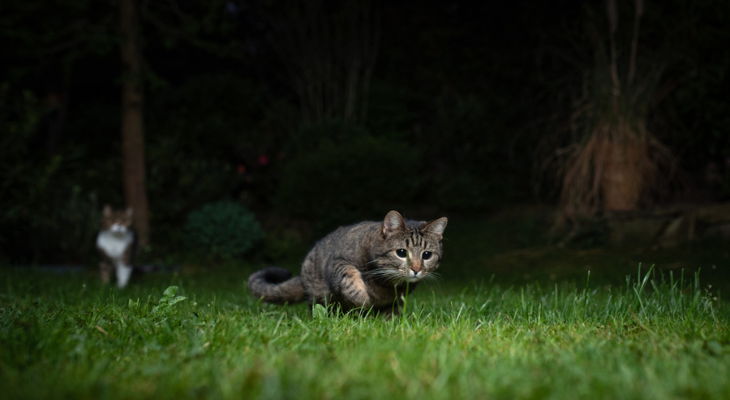
    Night time cat squad practices pouncing

    Tips to Keep Your Cat Calm During the Night

    If you live with a cat, you've probably been woken by the sound of thundering paws as your pet makes a mad dash through your home. Although the feline frenzy may be amusing when you're awake, things are a little different when your pet knocks over a lamp as you're trying to sleep. If you're exhausted by your cat's midnight antics, a few of these tips may help restore peace to your home in the evening.

    Help Your Pet Release Extra Energy

    You may have been busy during the day, but your cat's day was full of long naps and bird watching. Unfortunately, once the sun goes down, your pet may decide it's the perfect time to get rid of excess energy.

    Although many people believe that cats are nocturnal, felines are actually crepuscular, or more active at dusk and dawn. The more active your pet is during the day, the less energy it will have for pre-dawn, high-speed marathons over your sleeping body.

    Games offer the perfect way to tire out your pet. Encourage your favorite feline to bat a dangling toy at the end of a kitty fishing rod, fetch a small toy, or chase a laser beam.

    If you're away from home during the day, provide toys that will keep your cat busy. Pet supply companies offer plenty of options from dangling toy mice that hang from the door jamb to climbing structures to laser toys your cat can activate with a swipe of the paw.

    Make a Change to Mealtime

    Hunger could be one of the reasons your pet is so active in the evening. PetMD notes that cats often sleep after eating and recommends offering a small meal before you go to bed.

    Of course, offering extra food could increase your pet's weight. Luckily, you can prevent weight gain by slightly reducing the amount you feed your pet for dinner.

    Does your cat insist that you serve breakfast at 5 a.m.? Adding a timed pet food dispenser to your kitchen may solve the problem. Your cat will be less likely to disturb your sleep once it realizes that the dispenser releases food at the same time every morning. Finding treats hidden throughout your home will also give your pet something to do while you're asleep.

    Close the Bedroom Door

    Keeping your door closed at night can be a good solution, as long as you're willing to put up with a little complaining until your cat gets used to the new arrangement.

    You may be able to distract your pet by offering a selection of interesting toys or even a cardboard box outside your door. Of course, you'll want to choose toys that don't make sounds.

    Visit the Veterinarian

    If these tips don't help, it's a good idea to schedule a visit with the veterinarian. In some cases, a cat may be more active at night because it's ill or in pain. Does your older cat spend hours meowing during the night? It may be confused due to dementia.

    Your veterinarian can determine if a health issue is responsible for your cat's behavior and offer treatments or suggestions that will help everyone in your home get a better night's sleep.

    Are you concerned about your cat's nighttime activity level? A trip to the veterinarian will help you ensure that a health problem isn't to blame. Contact our office to make an appointment with the veterinarian.

    Sources:

    Petfinder: Keeping Your Cat Calm at Night

    https://www.petfinder.com/cats-and-kittens/training/general/keep-cat-calm-at-night/

    PetMD: How To Get Your Cat to Sleep At Night, 2/2/2022

    https://www.petmd.com/cat/general-health/how-get-your-cat-sleep-night

    WebMD: Nighttime activity in Cats, 3/16/2023

    https://pets.webmd.com/cats/guide/nighttime-activity-cats

    Purina: Myth Buster: Are Cats Truly Nocturnal?

    https://www.purina.co.uk/articles/cats/behaviour/common-questions/are-cats-nocturnal

    • Pet Health
      • Chronic Conditions
      • Digestive and Oral Health
      • Diseases and Viruses
      • Pests and Parasites
      • Orthopedics
    • Today's Veterinarian
    • Choosing Your Pet
      • Finding Your Pet
      • Cats
      • Dogs
      • Exotics
        • Amphibians
        • Birds
        • Reptiles
          • Lizards
          • Turtles
      • Small Mammals
        • Ferrets
        • Rabbits
        • Domesticated Animals
          • Prairie Dogs
        • Pocket Pets
          • Chinchillas
          • Guinea Pigs
          • Hamsters
          • Hedgehogs
          • Rats
      • Livestock
        • Cows
        • Donkeys, Horses & Mules
        • Goats
        • Pigs
        • Poultry
        • Sheep
    • Living With Your Pet
      • Bringing Your Pet Home
      • Children and Pets
      • Providing Care
      • Travel
      • Saying Goodbye
    • Newsletter Library
      • Cats
      • Tips for Pet Owners
      • Behavior & Training
      • Fleas & Parasites
      • Keeping Pets Healthy
      • Recognizing Illness
      • Nutrition & Food
      • Pet Dangers
      • Seasonal Topics
      • Visiting the Vet
      • Equine
      • Newsletter Archive
        • Fun with Pets
        • Unbelievable Pets
    • Video Newsroom
      • Health Topics
      • Technology and Science
      • Other Interests
    • Newsletter Library
    • Client Survey
    • Pets4Kids

    Contact Us

    Error!

      Location

      Find us on the map

      Office Hours

      Our Regular Schedule

      Monday:

      8:30 AM-7:00 pm

      Tuesday:

      8:30 AM-5:00 PM

      Wednesday:

      8:30 AM-5:00 PM

      Thursday:

      8:30 AM-5:00 PM

      Friday:

      8:30 AM-5:00 PM

      Saturday:

      8:30 am-12:00 pm

      Sunday:

      Closed

      • Copyright © 2026 MH Sub I, LLC dba iMatrix.
      • Admin Log In
      • Site Map